A Practical Guide to Marketing a Dental Clinic
Practical ways for Canadian dental clinics to fill the schedule with the right new patients through search, maps, reviews, ads and better websites, written for clinic owners and office managers and kept inside provincial advertising rules.
How can a dental clinic get more new patients?
A dental clinic gets more new patients by being easy to find, easy to trust and easy to book: a complete Google Business Profile, a steady flow of genuine reviews, search ads for the services it wants, a fast website with online booking, and a front desk that answers calls and forms quickly.
The mix depends on what you want more of. Emergency patients search and call within minutes. Families compare a few clinics near home. Implant and aligner patients research for weeks. CDCP patients want to know whether you take part. Each group needs a different message, and all of them must fit your province's advertising rules.
| If you want more… | Lean on | Start with |
|---|---|---|
| New patients in general | Google profile, reviews, search ads | New patients |
| Emergency visits | Call ads during opening hours, Maps | Emergency dental |
| Implant and cosmetic cases | Service pages, search ads, careful claims | Implants and cosmetic |
| Aligner patients | Clear titles, service pages, search ads | Clear aligners and orthodontics |
| Whole families | Profile, mail, household booking | Family dentistry |
| CDCP patients | Clear participation and cost messages | CDCP patients |
| Patients who come back | Recall systems, consented email and texts | Recall and retention |
Each channel below has its own guide, Google Ads has six more, and twelve cities in five provinces have local strategies. If you read one page next, read how to get more new dental patients.
Which marketing channels work for dental clinics?
The channels that work best for dental clinics catch people already looking for a dentist nearby: Google Business Profile and Maps, search ads, SEO and reviews. Social media and direct mail reach people before they search. The website turns all of them into bookings.
Reach people searching for a dentist right now.
FastestRead the guide SEORank for your services and neighbourhood all year.
CompoundingRead the guide Google Business ProfileWin the map, where most local choices start.
FoundationRead the guide ReviewsAsk every patient, within Google's rules.
TrustRead the guide WebsiteTurn visits from every channel into bookings.
ConversionRead the guide AI searchBe easy for ChatGPT and Google's AI to describe.
EmergingRead the guide Social mediaShow the team, with consent and care.
CommunityRead the guide Direct mailPostcards to the streets around the clinic.
OutboundRead the guideWhat do you want to improve?
Start from the problem rather than the channel. Each option goes to the page that answers it first.
Dental Marketing ROI Calculator
Estimate what a monthly marketing budget could produce in enquiries, booked appointments, new patients and first-year fees. Change any number to match your clinic, or start from an editable example. It is a planning aid, not a promise.
Estimate what your marketing budget could generate in enquiries, new patients and revenue.
Illustrative estimate only. Actual results depend on your market, services, chair capacity, competition, booking rates and patient value. No outcome is guaranteed. The presets are editable examples, not industry benchmarks. Start from your own numbers where you have them. Retention example: 6 years.
At these assumptions, $4,000 a month could bring about 21.3 new patients and $25,600 in first-year fees. Want help turning this budget into booked new-patient appointments? ShoutEx can help you plan and run the acquisition strategy.
Talk to ShoutExFill the chairs you have, with the patients you want.
A clinic short on hygiene time needs different marketing from one with an empty implant schedule. Start from capacity and treatment mix, then choose the channel.
What do compliant dental Google Ads look like?
Compliant dental ads repeat the searcher's words, say general dentistry or the specialty, and give a practical reason to book, such as hours or location. They avoid testimonials, superlatives, free offers and promises about results, which the rules in Ontario, Nova Scotia and Newfoundland and Labrador restrict.
Exams, cleanings and fillings for adults and children. Direct billing available.
Exams, cleanings and fillings for adults and children.
CallPainless, guaranteed results with state of the art care. Book now!
- "#1" and "state of the art" are superlatives Ontario bans
- Free offers are banned in Ontario and Nova Scotia
- "Painless" and "guaranteed" promise results
- No general dentist or specialist disclosure
Tooth pain or a broken tooth? Call during opening hours to ask about a same-day visit.
- Matches the urgent search
- Discloses general dentistry
- A specific, honest next step
Intent groups, CDCP and negatives.
Read the guide Ad examplesCompliant ad mock-ups, weak vs strong.
VisualRead the guide Ad landing pagesSearch to page to booking.
Read the guide CostBudget from patient value.
Read the guide Call and booking trackingCount calls and bookings, not clicks.
Read the guide Emergency campaignsHours, calls and after-hours handling.
Read the guideWhat advertising rules apply to dentists in Canada?
Each province's dental regulator sets the rules, and they differ more than most clinics expect. Ontario, Nova Scotia and Newfoundland and Labrador ban testimonials. Free offers and giveaways are banned in Ontario and Nova Scotia; coupons, time-limited discounts and gift certificates are barred in Newfoundland and Labrador. Superlatives are barred in Ontario; quality comparisons and superiority claims are barred in Nova Scotia and Newfoundland and Labrador. BC allows some offers to specific groups if nothing misleads. Alberta requires general dentist or specialist disclosure at all material points of contact. Federal competition law and Google's own review rules apply everywhere.
| Province | Regulator | Rule that most changes the marketing |
|---|---|---|
| Ontario | RCDSO | No testimonials, superlatives, giveaways or guarantees; disclose general dentist or specialty |
| British Columbia | College of Oral Health Professionals | Offers to specific groups allowed if not misleading; no selling treatment before assessment |
| Alberta | CDSA | Disclose general dentist or specialist at all material points of contact |
| Nova Scotia | NSRDDA | No free or discounted services; keep a copy of each ad for a year |
| Newfoundland and Labrador | NL Dental Board | "General Dentist" right after the name; no coupons or gift certificates |
The full comparison, a pre-publish checklist and compliant and non-compliant examples are on dental advertising rules by province. For local detail, read the Vancouver, Calgary, Halifax and St. John's pages. None of this is legal advice.
How should marketing differ by patient and service?
Marketing should differ by service because each patient group searches, compares and decides on its own timeline. An emergency patient calls within minutes, a family compares two or three nearby clinics, and an implant patient may research for months and talk it over with family first.
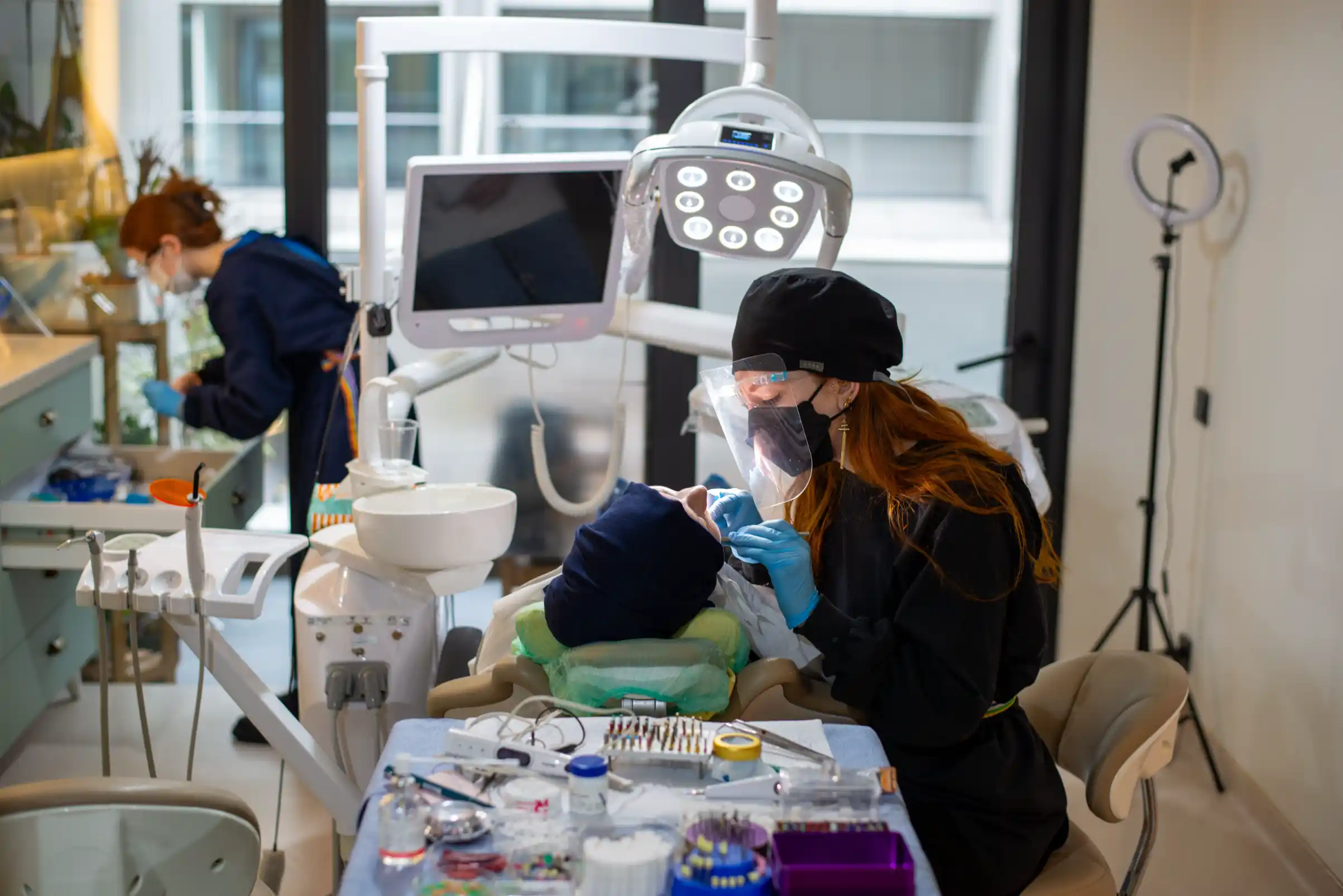
Match the channel and the message to that timeline, and keep the claims modest. The table below is a starting point; the cards link to a full guide for each group.
| Patient group | How fast they decide | What they compare | Channels that fit |
|---|---|---|---|
| Emergency | Minutes | Who can see me today, distance | Call ads, Maps, a phone answered |
| New general patients | Days | Location, hours, insurance, reviews | Profile, search ads, website |
| Families | Days to weeks | Household booking, child-friendly care | Profile, mail, family pages |
| Implants and cosmetic | Weeks to months | Process, cost, who provides it | Service pages, search ads, AI search |
| Clear aligners | Weeks | General dentist or orthodontist, cost | Service pages, search ads |
| CDCP patients | Days | Participation, extra charges | Clear website section, front desk script |
The full new-patient system.
Start hereRead the guide Emergency dentalAnswer urgent calls that become patients.
Read the guide Implants and cosmeticHigh-value treatment, careful claims.
Read the guide Clear aligners and orthodonticsTitles, aligners and specialist rules.
Read the guide Family dentistryBook the whole household.
Read the guide CDCP patientsExplain participation and costs clearly.
Federal planRead the guide Recall and retentionKeep the patients you already have.
Read the guide Marketing budgetSet spend from chair time and patient value.
PlanningRead the guide Advertising rulesON, BC, AB, NS and NL compared.
ComplianceRead the guideHow does the CDCP change dental marketing?
The Canadian Dental Care Plan brought many people without private insurance back into dental offices, and they ask a new first question: do you take the CDCP? Health Canada's 2025 announcement opened applications to adults aged 18 to 64 from May 2025 and said nearly 98% of active dentists, denturists, hygienists and specialists were participating.
- Say clearly on the website and profile whether you participate, and how billing works.
- Explain that patients may pay extra when your fee is above CDCP rates or a service is not covered.
- Train the front desk to answer CDCP questions in one minute.
- Never advertise the plan as making care free; it is not true for every patient.
The detail, including eligibility and the government's provider toolkit, is on marketing to CDCP patients.
How should a dental clinic plan, budget and measure marketing?
Plan from chair capacity and the patients you want, set the budget from patient value and cost per new patient, and measure every channel by booked and attended appointments rather than clicks. Speed of follow-up belongs in the plan: research published in Harvard Business Review found firms that contacted online leads within an hour were far more likely to qualify them than those that waited longer.
- Set the budget with the dental marketing budget guide and Google Ads cost for dentists.
- Track calls and online bookings by source with call and booking tracking.
- Answer web forms and missed calls within the hour during opening hours.
Can dental clinics get patients from ChatGPT and AI search?
Some patients now ask AI assistants which dentist to see, or what an implant involves, and then visit the clinics mentioned. Nobody can guarantee a mention, but clinics with clear, accurate service and location pages are easier for these systems to find and cite.
Google says its AI features rely on the same crawling and indexing as Search, so the basics are shared with SEO: specific service pages, accurate hours and locations, named dentists with their titles, and a site crawlers can read. The full approach is in AI search for dental clinics.
Dental Marketing by City
Local markets differ. Toronto rewards multilingual service near condo towers, Ottawa rewards French, Brampton rewards family booking, and outside Ontario the regulator's rules change what an ad can say. Each city page has its own patient groups, neighbourhoods, sample ads and a first 90 days plan.
Condo-dense downtown growth and multilingual service.
Local strategy OntarioOttawaBilingual clinics, French pages and ads.
Local strategy OntarioMississaugaA mature market: compete for existing patients.
Local strategy OntarioBramptonLarge households, family booking, many languages.
Local strategy OntarioHamiltonNew subdivisions on the Mountain and east end.
Local strategy OntarioLondonStudents, evening hours and growth in the north.
Local strategy OntarioWindsorShift and cross-border workers, early and late hours.
Local strategy OntarioKitchener-WaterlooNewcomers looking for a first Canadian dentist.
Local strategy British ColumbiaVancouverDense, walkable, multilingual; BC rules differ.
Local strategy AlbertaCalgaryNew communities and clinic launches.
Local strategy Nova ScotiaHalifaxMovers from other provinces need a new dentist.
Local strategy Newfoundland and LabradorSt. John'sSeniors, dentures and strict NL rules.
Local strategyFrequently asked questions
What is the best marketing for a dental clinic?
Usually a complete Google Business Profile, steady reviews, search ads for the services you want and a website with online booking. The right mix depends on capacity and treatment goals.
Do Google Ads work for dentists?
Yes. Many patients search when they need a dentist, especially for emergencies and new-patient visits. Results depend on keywords, ads, landing pages, call handling and tracking.
How much should a dental clinic spend on marketing?
Enough to fill the chair time you have with the patients you want, at a cost per new patient your fees support. Start from capacity and patient value, not a fixed percentage.
What does a new dental patient cost to acquire?
It varies widely by city, service and channel, and we do not know of a reliable Canadian average. Measure your own cost per booked and attended new patient.
Can dentists use patient testimonials in Canada?
Not in Ontario, Nova Scotia or Newfoundland and Labrador. Other provinces require claims to be accurate and not misleading. Check your own regulator.
Can dentists advertise free exams or discounts?
Not in Ontario or Nova Scotia. Newfoundland and Labrador bars coupons, time-limited discounts and gift certificates. BC allows some offers to specific groups if they are not misleading. This guide's examples avoid offers.
Do dentists have to say general dentist in ads?
Ontario, Nova Scotia, Newfoundland and Labrador and Alberta all require clear disclosure of general dentist or specialist. Doing it everywhere is the safe default.
Can a dental clinic ask patients for Google reviews?
Yes, if you ask every patient, offer nothing in return, and do not filter out unhappy patients. Google bans paid and selectively solicited reviews.
Can dental clinics use remarketing in Google Ads?
No. Health is a sensitive category, so Google does not allow remarketing, Customer Match or lookalike audiences for health advertisers.
Is SEO worth it for dentists?
Yes for most clinics, because people search by service and neighbourhood all year. Expect months before results and run paid search alongside it.
Should a dental clinic say it accepts the CDCP?
If you participate, yes, clearly and accurately, with an explanation of possible extra charges. Many patients ask this first.
Can dentists get patients from ChatGPT?
Some patients ask AI assistants for recommendations. No one can guarantee a mention, but clear, accurate service pages improve the odds.
How fast should a clinic respond to web enquiries?
Within the hour during opening hours. Research in Harvard Business Review found quick follow-up made leads far more likely to qualify.
Should dental clinics use social media?
Yes, to show the team and the clinic, with explicit consent before any patient appears. Some posts count as advertising and must follow the same rules.
Does direct mail work for dentists?
It can, for neighbourhoods near the clinic and new movers. Use your own patients' information for marketing only with the consent your province requires.
What should a dental clinic website include?
Services with who provides them, hours, location, insurance and CDCP information, the dentists with their titles, and online booking or a clear phone number.
How do dental clinics keep patients coming back?
With a reliable recall system, reminders sent with proper consent, and easy rebooking at the end of every visit.
Sources & further reading
Regulator rules, platform policies and local data change. These sources let you check the facts on this page, last checked October 5, 2026.